
Dear Colleagues and Friends
As we move into the last quarter of the year, there is plenty happening in the Hypertension Australia orbit. Plenty of exciting work is summarised below by our membership and collaborators as always, of which there will be much more to see at the upcoming Annual Scientific Meeting in Melbourne which is rapidly approaching.
We have seen a very successful Winter School driven by the ECR committee pulling in big name speakers to discuss how we may best communicate our work to our patients and communities. A huge congratulations to the organisers for their hard work.
In other news, the new Australian Hypertension Guidelines are also now open for public consultation prior to their highly anticipated launch. Those interested in reading through and providing feedback can find the link below.
Wishing you all the best for the week ahead.
Best wishes,
Gianni Sesa-Ashton
Chair, Communications Committee
Hypertension Australia
If you would like to have this newsletter delivered to your inbox, please subscribe here.
Know someone who should receive the Hypertension Australia newsletter? Simply share this with them by clicking the button below.
We’d love to hear your thoughts on what you are interested in seeing in this newsletter – please take a moment to complete the short survey below and help us improve future issues.
A meta-regression analysis of 101 randomised trials found a strong relationship between average follow-up blood pressure and the proportion of patients achieving blood pressure control. Researchers reported that each 1 mmHg reduction in systolic blood pressure was associated with an approximately 2% increase in control rates. The findings suggest that achieving an average systolic blood pressure below 125 mmHg may be required to ensure around 80% of patients reach standard blood pressure targets, providing important insights for clinical practice and population-level hypertension programs.
A new update from the National Hypertension Taskforce shows that blood pressure control rates in Australia improved from 32% to almost 40% between 2017-18 and 2022-23. However, hypertension prevalence has also increased, with almost four in ten Australian adults now living with high blood pressure. The report highlights significant disparities in detection and control among First Nations peoples, younger adults and people living in socioeconomically disadvantaged areas, reinforcing the need for targeted strategies to achieve the Taskforce’s goal of 70% blood pressure control by 2030.
Long-term follow-up from the China Rural Hypertension Control Project found that an intensive blood pressure management program led by nonphysician community healthcare providers continued to reduce cardiovascular events up to seven years after enrolment. Participants achieved better blood pressure control and experienced fewer heart attacks, strokes, heart failure hospitalisations and cardiovascular deaths compared with those receiving usual care. The findings demonstrate the potential of team-based, community-delivered hypertension management models to produce sustained improvements in cardiovascular health.
A study comparing office blood pressure measurement protocols across eight international hypertension guidelines found meaningful differences in blood pressure readings and hypertension classification. Depending on the protocol used, the proportion of patients considered to have uncontrolled hypertension varied substantially. The authors warn that inconsistent measurement approaches may limit comparability between guidelines and could influence clinical decision-making, highlighting the need for greater international standardisation of blood pressure measurement practices.
Researchers have developed a new standard operating protocol for the seated saline suppression test, an important confirmatory test used in the diagnosis of primary aldosteronism. The protocol addresses common variations in patient preparation and test administration that may affect diagnostic accuracy, including ensuring adequate potassium levels and consistent timing of saline infusion. Standardising the procedure may improve the reliability of test results, support clinical decision-making and help identify patients most likely to benefit from further investigation and targeted treatment.
This review examines how colonic pH, shaped by gut microbiota activity and dietary fibre fermentation, may influence blood pressure regulation and cardiovascular health. The authors highlight emerging evidence linking a higher colonic pH with hypertension and discuss how proton-sensing receptors such as GPR4, GPR65 and GPR68 may mediate immune and vascular pathways involved in blood pressure control.
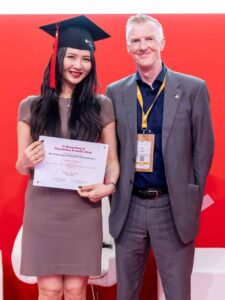
Dr Tian Wang is an early-career researcher at The George Institute for Global Health whose work spans hypertension prevention, detection and long-term management. Drawing on her background as a dietitian and cardiovascular researcher, Tian investigates the role of nutrition, medication access and adherence, blood pressure variability and community-based screening in improving cardiovascular outcomes. Inspired by both her professional experience and a personal family connection to hypertension, she is committed to translating research into practical solutions that help people detect, manage and control high blood pressure more effectively.

The Cardiometabolic Health and Exercise Physiology team at Baker Heart and Diabetes Institute is advancing research into the prevention and treatment of cardiometabolic disease through exercise interventions, integrative physiology techniques, and novel therapeutics. Their current work explores the neural and autonomic drivers of blood pressure control in conditions including hypertension, Long COVID and ME/CFS, while also investigating how exercise can protect cardiovascular health across the lifespan.
Would you like your laboratory to be featured in for an upcoming Member Spotlight or Lab Spotlight? Submit an Expression of Interest (EOI) to showcase your research, projects and achievements with the Hypertension Australia community.
The 2026 Hypertension Australia Winter School a great success!
The Winter School, held on 20 August, brought together early and mid-career (EMCR) hypertension researchers from across Australia who represented diverse areas of hypertension research.
The theme of this year’s Winter School was Communicating Science for a Layperson Audience. Not only does effectively communicating our science to the public maximise the real-world impact of our research, but it is essential for increasing community understanding, trust and engagement with research. Whether through traditional media, public talks, social media, or community engagement, scientists who connect with diverse audiences are better positioned to inspire action, influence policy and foster greater appreciation for the value of research.
Thank you to keynote speakers Dr Shane Huntington OAM PhD, Caroline Finch AO PhD, and Jocelyne Mulangala, PhD, who shared expert insights on what effective science communication looks like and provided actionable ways to improve our skills. Key messages from the day included:
Congratulations to our EMCR presenters Sonali Shah, Isis Loos, Maleesa Melanie Pathirana, Audrey Adji, Buddhila Wickramasinghe and Melanie Bertossa. Each EMCR speaker rose to the challenge of sharing their work in a way that is appropriate for a community audience and then had the valuable opportunity to receive tailored feedback from our keynote speakers.
The Winter School, once again, provided a valuable opportunity for learning, collaboration, and networking. Thank you to everyone who attended and presented for supporting this important event.
A special acknowledgment to Eleanor Clapham, Adriana Knezic, and Kaylee Slater from the EMCR Committee for leading the organisation of this successful event.

Public consultation is now open on the draft 2027 Australian Guideline for the Diagnosis and Management of Elevated Blood Pressure and Hypertension in Adults.
This is the first major update to Australia’s hypertension guideline in a decade and we are seeking feedback from clinicians, researchers, consumers, professional groups and health organisations.
We encourage you to review the draft guideline and provide feedback to help ensure the recommendations are relevant, practical and applicable across Australian healthcare settings.
Consultation closes Monday 12 October 2026.
Be part of the conversation that will shape the future of blood pressure control in Australia. Join us at the National Hypertension Summit 2026 on 19 November in Adelaide to hear the latest research, connect with leaders across the sector, and explore practical solutions to improve hypertension prevention, detection and management. Attendance is complimentary, but registrations are essential.

A qualitative study of Australian general practitioners has highlighted several challenges to achieving optimal blood pressure control in primary care. Researchers found that many GPs continue to rely on the 2016 Australian hypertension guidelines, commonly initiate treatment with a single agent and infrequently use single-pill combinations early in treatment. The study also identified limited use of team-based care and a lack of practice-level blood pressure audits. The authors suggest that updated national guidelines, increased uptake of single-pill combinations and greater multidisciplinary support could help improve hypertension management across Australian general practice.
A new STRIDE BP report highlights a significant shortage of validated automated blood pressure devices for use in children. Of more than 600 validation studies reviewed, only a small number met strict methodological standards and confirmed device accuracy in paediatric populations. The authors note that devices validated in adults cannot automatically be assumed to be accurate in children and emphasise the importance of using appropriately validated equipment for diagnosis and monitoring. The report calls for greater investment in paediatric device validation to support accurate blood pressure measurement and improve the detection and management of hypertension in children.
High blood pressure often has no symptoms, but small changes can have a big impact. That’s why the Heart Foundation and No Money No Time have partnered to deliver a free 6-week online program designed to help Australians better understand their blood pressure and support their heart health.
Participants will receive practical tools, healthy recipes, expert guidance, shopping tips and achievable weekly goals to help them build healthier eating and lifestyle habits. The program is free, evidence-based and designed to fit into everyday life, making it easy for people to take positive steps towards improving their long-term health.
We encourage you to share this opportunity with your community and help more Australians take charge of their heart health.

High blood pressure isn’t just an adult condition – it can also affect children and adolescents. A new Australian-first guideline, now available on the Hypertension Australia website, aims to help healthcare professionals identify and manage high blood pressure earlier, improving health outcomes for young Australians.

Hypertension Australia 2026 Annual Scientific Meeting

Preliminary program now available
The Hypertension Australia 2026 Annual Scientific Meeting Organising Committee is delighted to announce that the preliminary program is now available!
Taking place from 2-4 December 2026 at the Rendezvous Hotel Melbourne, the program will feature engaging scientific sessions, the latest hypertension research and important discussions around the 2026 Australian Hypertension Guidelines.
View the preliminary program and start planning your time at the ASM!
Early bird registration extended
Early bird registrations have been extended to 19 October 2026. This is your change to register for the ASM at discounted rates.
The ASM will bring together clinicians, researchers and healthcare professionals from Australia and overseas to explore the latest research, evidence and advances in hypertension prevention, detection and management.