Initiating a special interest group within Clinical Council Hypertension Australia
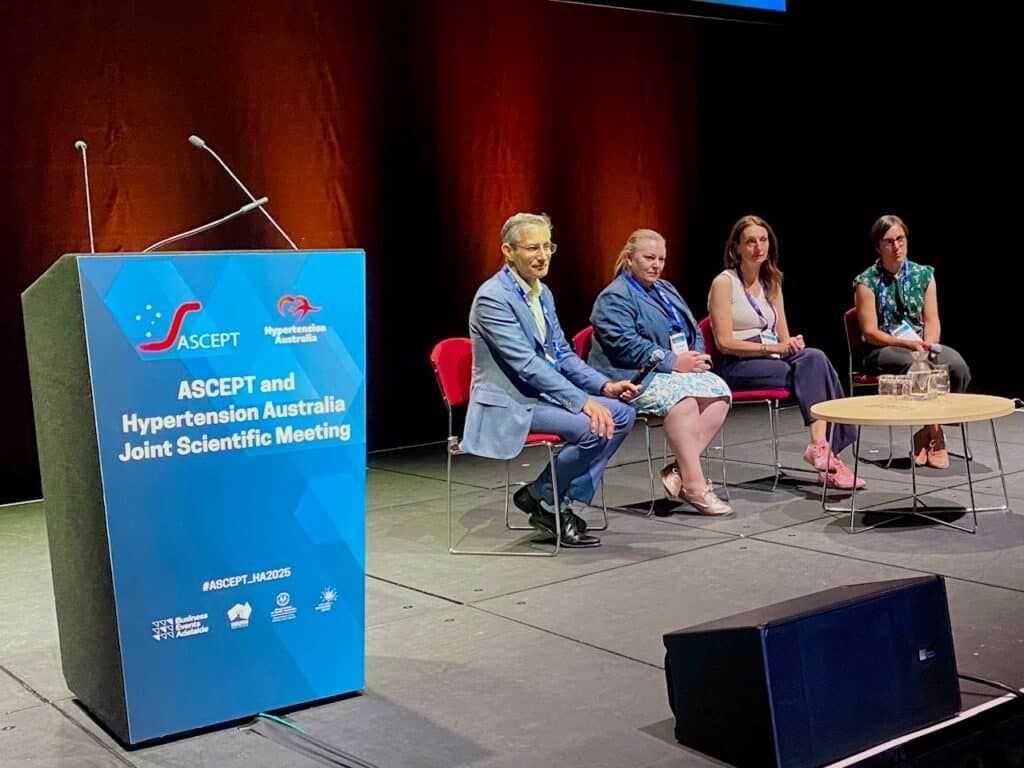
Around 2% of Australians have intellectual disability (ID). People with ID experience lifelong health disadvantage, with twice the rate of avoidable deaths, higher rates of physical and mental health conditions and lower rates of access and delivery of preventative healthcare. Indeed, the Disability Royal Commission noted that “people with cognitive disability have been and continue to be subject to neglect in the Australian health system”. Life expectancy of people with ID is around 20 years less than that of the general population, with deaths typically due to preventable causes, primarily cardiovascular disease. At the recent ASCEPT and Hypertension Australia Joint Scientific Meeting held in Adeliade, Hypertension Australia hosted a symposium aimed at Understanding and improving the Cardiometabolic Health of People with Intellectual Disability. The symposium drew on the experience of leaders in the field to present the issue and propose initiatives to address the problem.
The symposium commenced with Professor Julian Troller (Director National Centre of Excellence in Intellectual Disability Health, University of New South Wales) presenting a population-based analysis of the prevalence of cardiovascular disease in people with intellectual disability. Professor Troller concluded that people with ID experience systemic neglect in their preventive health care, including in relation to cardiometabolic health, and that this will continue unless their needs are linked to specific actions in population health and prevention initiatives, with resources tailored to the needs of people with ID. Noting the need to progress in developing resources for disease prevention, Professor Troller presented results from a pilot study aimed at developing and implementing a framework for supporting positive cardiometabolic (heart) health in people with ID.
Associate Professor Elisabeth Lambert (Senior Research Fellow, MedTechVic Research Hub and Iverson Health Innovation Research Institute, Swinburne University of Technology) gave an overview of her team’s work in determining the mechanisms of cardiac and metabolic risk in individuals with ID. In their cross-sectional analysis they found that adults with ID exercise less, have higher blood pressure, increased adiposity, higher haemoglobin A1c levels and experience higher levels of stress and social isolation than those without ID. Variation in blood pressure variability and in sudomotor nervous function was suggestive of some degree of autonomic nervous dysfunction and predisposition to early risk of diabetes development. The degree of stress was related to markers of vascular ageing. The results indicated that developing targeted approaches to manage the specific stress profile in people with ID might be beneficial.
The second half of the session focussed on how to work with people with ID in developing and testing co-design approaches to support cardiovascular and metabolic health. Professor Rachael McDonald (Director MedTechVic Research Hub, Swinburne University of Technology) presented her group’s co-design framework that can be applied to the development of health promotion strategies in people with ID. Importantly, the process utilises the UK Double Diamond structured approach where individuals with ID, carers and service providers are engaged from the outset of research to define priorities, shape intervention design and evaluate feasibility. Participatory workshops, accessible communication methods, and iterative prototyping ensure equity of input and shared decision-making. Using this co-design process has enabled the creation of tailored digital and hybrid health programs, accessible nutrition and exercise resources, and inclusive evaluation methods. Involving end users from the outset has identified barriers such as fatigue, sensory sensitivity, accessibility of technology, allowing for adaptation to ensure feasibility and effectiveness. Embedding end users in research initiatives enhances the equity, inclusivity and translational potential of health promotion strategies.
Healthy food provision and preparation can present unique and complex challenges for people with ID. Using co-design approaches Doctor Roberta Asher (Postdoctoral Fellow, University of Newcastle) demonstrated the feasibility of developing and implementing the Food and Lifestyle Information Program (FLIP) culinary nutrition intervention for adults with ID. The FLIP and pilot study were developed in partnership with an academic research team and co-researchers with lived experience of ID. The eight-session pilot evaluated feasibility (recruitment, retention, engagement, adverse outcomes), acceptability (interactive process evaluation), and preliminary effectiveness (cooking frequency, food skill confidence, diet quality) using measures adapted for people with ID. Six of eight participants completed the study with high attendance and engagement. The FLIP eight-week small group sessions featured cooking and nutrition education activities, Easy Read paper-based resources, and opportunities for participant choice. Co-researchers with ID contributed to the design of recipes, program materials and evaluation tools, enhancing accessibility of the program Overall, the FLIP was well received by participants and was feasible to run. Diet quality was feasible to measure. Future studies will enable further iterative development and will evaluate whether these types of programs can improve participants’ cooking and meal planning skills, diet quality, health and wellbeing.
The symposium addressed a critical need in a disadvantaged and under-represented population. Over the past decade, the presenters’ work with individuals with ID, their carers, and disability service providers, has revealed widespread under-diagnosed cardiovascular risks and systemic barriers to health self-management. The presentations provided insight into developing and delivering equity-focused co-designed solutions to enhance cardiovascular health for people with ID. Following the presentations the panel took questions from the audience, which were mainly directed towards engagement and provision of clinical services to people with ID. It was proposed to develop a special interest group, focussed on managing blood pressure and cardiometabolic risk in people with ID.